
6 Signs Your Zinc Bath Is Out of Spec
Why Chemistry Problems Hide
The most dangerous bath chemistry issues develop slowly. A bath that drifts 10% out of spec over three months produces subtly worse parts the whole time — but the degradation is gradual enough that operators adapt to it. By the time someone formally identifies a reject spike, the bath has been out of spec for weeks. Systematic monitoring closes that gap. See pH, ORP, and Amp Hours for the three measurements that catch drift early.
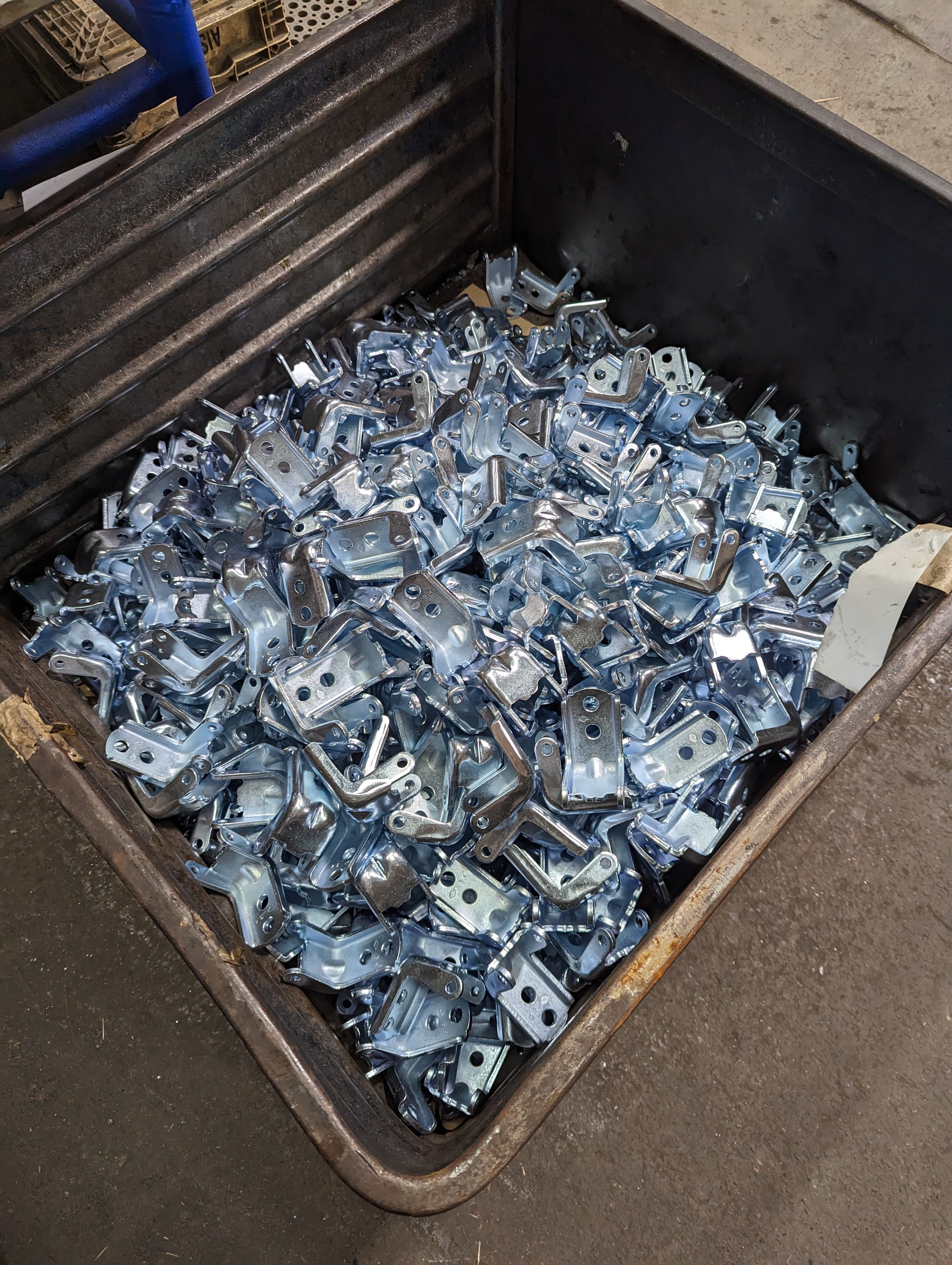
Six Warning Signs
1. Dull or hazy deposits. Often the first indicator of brightener depletion or organic contamination. Before chasing mechanical causes, check your brightener addition schedule and run a Hull Cell. A clean bath with correct brightener produces a visibly different deposit than a bath that's low on carrier concentration. If Hull Cell results confirm brightener depletion, increase additions and recheck within one shift before making any other changes.
2. Edge burning on complex geometry. High-current-density burning at edges and protrusions typically indicates either insufficient complexing agent, elevated carbonate, or current density that's too high for the part geometry and bath composition at current levels. Check zinc metal concentration and complexing agent ratio before adjusting current. Burning that tracks with geometry changes is almost always a bath composition issue — not a current density issue alone.
3. Adhesion failures on steel substrates. When zinc deposits pass visual inspection but fail tape test or bend test, the problem is almost always pre-treatment, not plating chemistry. Specifically: insufficient activation, drag-in contamination in the zinc bath from inadequate rinsing, or iron contamination from acid activation carryover. See Pre-Treatment Chemistry for a systematic approach to the pre-treatment sequence.
4. Rising bath conductivity without production increases. Bath conductivity that climbs over time without a corresponding increase in production volume typically signals carbonate buildup or contamination accumulation. In alkaline zinc systems, carbonates form gradually from CO₂ absorption and organic oxidation. High carbonate levels reduce bath efficiency, increase roughness, and eventually cause pitting. Check carbonate concentration by titration; if it's climbing, a partial bath replacement (or carbon treatment followed by dilution) is the corrective action.
5. Rectifier current draw creeping up without production changes. Higher bath resistance means the rectifier is working harder to maintain target current. Check for anode passivation first — a passive anode dramatically raises bath resistance and is easily overlooked. If anodes are clean, check bath composition for low zinc metal or high carbonate. Rising resistance at constant production is always telling you something has changed in the bath.
6. Visual inconsistency across positions in the same barrel. When parts at different positions in the barrel plate differently — thickness variation, appearance variation — the issue is usually geometric, not chemical. Check barrel open area (see Why Barrel Open Area Matters), anode basket geometry relative to barrel position, and bath agitation pattern. Systematic variation that repeats cycle-to-cycle is a fixable mechanical issue, not a chemistry problem.
When to Call In Chemistry Support
If you're seeing two or more of these signs simultaneously, a formal bath analysis is warranted. Start with your current chemistry supplier or a qualified lab, then use the results to decide whether the next improvement is testing discipline, feed control, operating procedure, or equipment geometry.
Need better bath visibility or help framing a chemistry-control problem? AquaPhoenix supports reagents and test kits, Becker supports chemical feed and monitoring, and Jim can help decide what information to gather first.
Discuss Bath Control →