The Dangler Sizing Guide: How to Spec the Right Cathode Cable for Your Zinc Line
Why Dangler Sizing Matters
A cathode dangler is the electrical connection between your busbar and the plating barrel. If it's undersized, you're choking current to the barrel — producing thinner deposits, longer cycle times, and higher rectifier draw. If the tip material is wrong for your chemistry, you're replacing danglers more often than necessary. If the cable diameter doesn't fit your bearing bore, you have an installation problem before you even start plating.
This guide covers how to spec a dangler correctly based on data from 57+ custom Eagle Engineering dangler designs delivered to North American plating operations.
Step 1: Choose Your Cable Size by Amperage
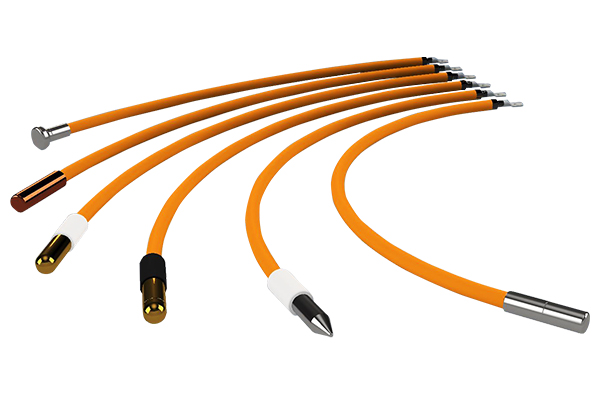
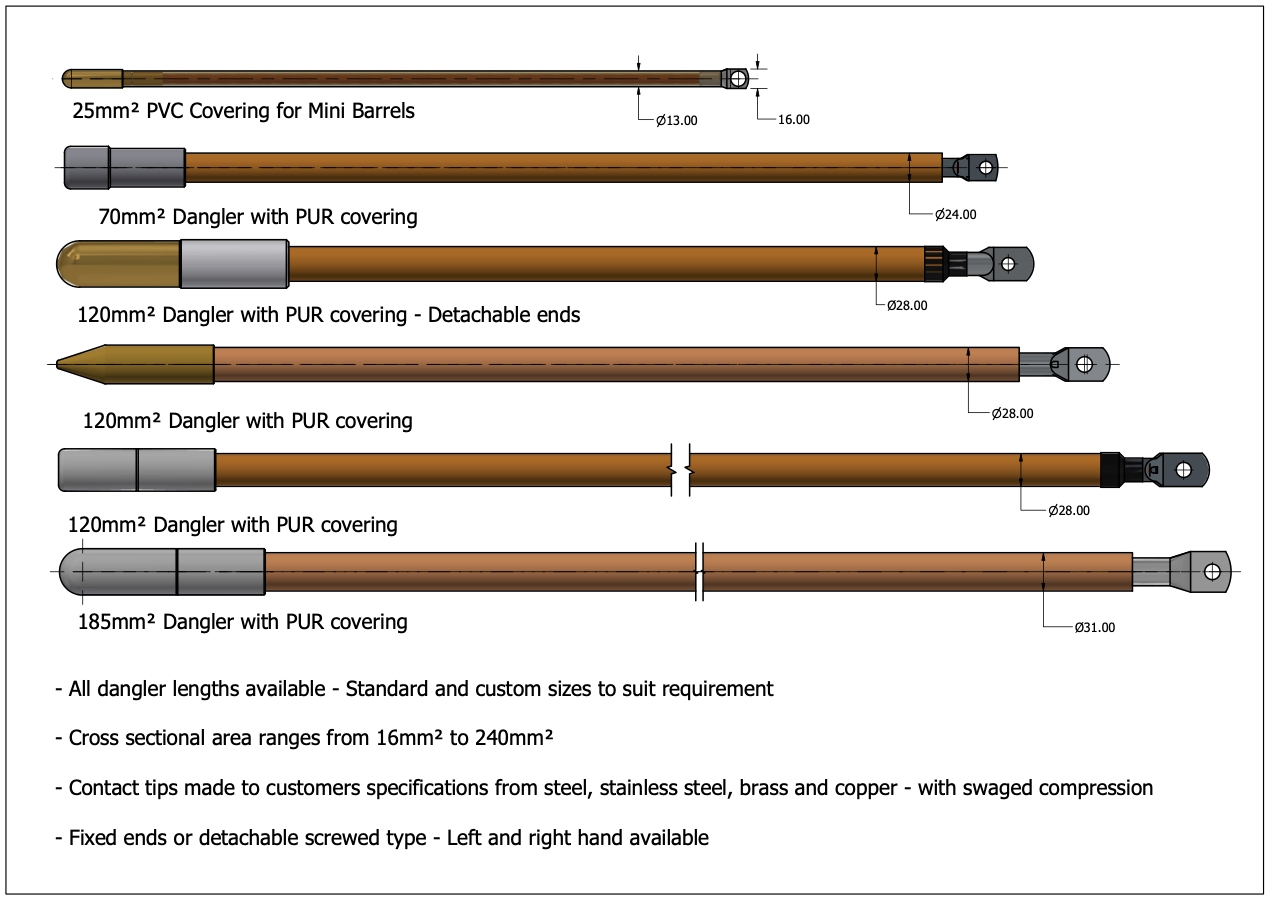
Cable size determines the maximum current your dangler can carry. Two danglers per barrel means double the per-dangler rating for your barrel capacity:
| Cable Size | AWG | Diameter | Amps/Dangler | Amps/Barrel | Insulation | Tip Options |
|---|---|---|---|---|---|---|
| 50mm² | 1 AWG | 20mm | ~200A | ~400A | PVC | Fixed only |
| 70mm² | 2/0 AWG | 24mm | ~250A | ~500A | PVC | Fixed only |
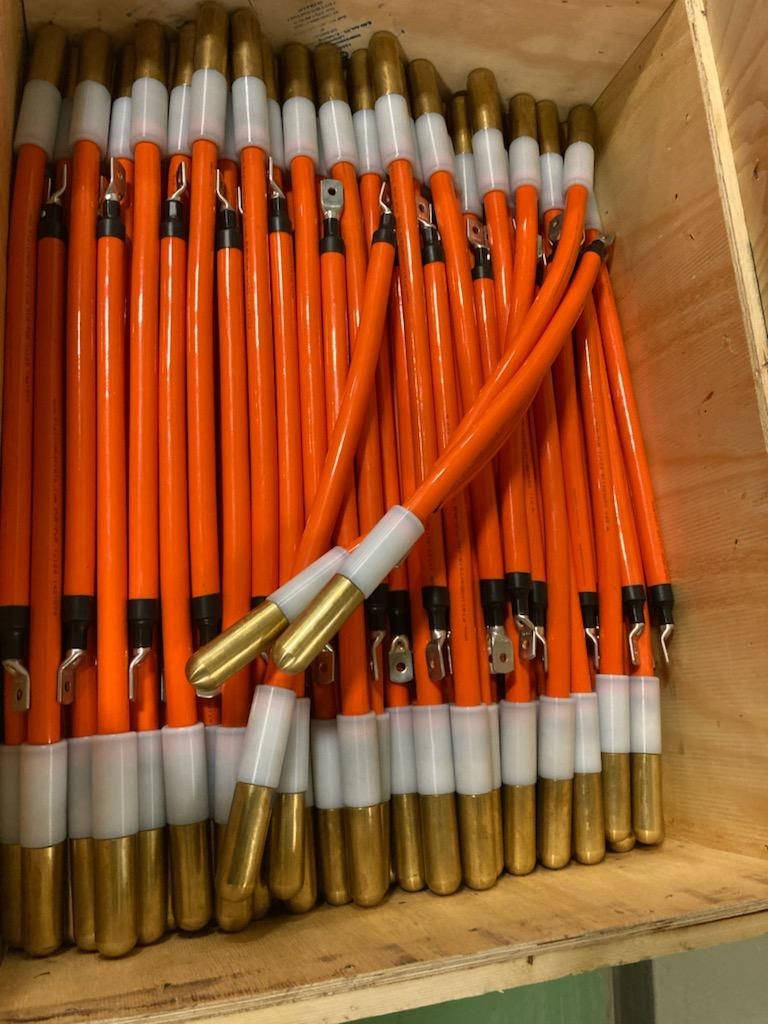
| 120mm² | 4/0 AWG | 28.5mm | 350-450A | ~900A | PUR | Fixed & Removable |
| 185mm² | 6/0 AWG | 30.5mm | 450-550A | ~1,100A | PUR | Fixed & Removable |
The 97% rule: 120mm² (4/0 AWG) covers 97% of zinc plating applications. At 350-450A per dangler and ~900A per barrel, it handles the current requirements for nearly every barrel zinc, acid zinc, and alkaline zinc operation. Always size to have more cable capacity than your process requires — you want headroom, not a bottleneck.
185mm² is reserved for heavy-duty applications running higher amperages — typically larger barrels or operations pushing maximum throughput. The 185mm² conductor contains 23,580 individual 0.10mm annealed copper wires (Cu-ETP1 per DIN EN 13602), rated at 570A uninsulated or approximately 456A with the PUR derating (manufacturer recommends 20% reduction when insulated).
Why PUR Insulation — The Material Specs
Eagle’s larger-cable danglers (120mm² and 185mm²) use 100% ether polyurethane (PUR) insulation; smaller cables (50–95mm²) are available in PVC. For high-amperage applications, PUR is the required choice — the material difference is significant in a plating environment:
- Chemical and corrosion resistant — withstands continuous exposure to acids, alkalis, and plating chemistry
- Abrasion resistant — resists wear from barrel rotation and part contact far longer than PVC
- Shore A 90 hardness — tough enough to resist cuts and nicks, flexible enough to avoid cracking
- Operating temperature: -30 degrees C to +70 degrees C (occasional use up to 100 degrees C). Brittle point: -70 degrees C — remains flexible even at extremely low temperatures
- Hydrolysis resistant — does not degrade from moisture exposure over time
- Silicone, cadmium, and plasticiser free — no contamination risk to plating baths from cable degradation
- Anti-twist / anti-pigtail — PUR cable maintains consistent diameter with no step-down points, resisting the twisting failure mode common in PVC-insulated domestic danglers
PVC-insulated domestic danglers stiffen, crack, and lose flexibility in the plating environment. PUR maintains its elastic properties across years of service — which is why customers document 8-10x longer cable life versus domestic alternatives. The cable itself outlasts multiple sets of tips.
Step 2: Determine Your Length
Eagle measures dangler length from bolt hole center to tip end. This is different from most US domestic manufacturers who measure end-to-end — so Eagle's measurement will be approximately 0.5" shorter than the equivalent domestic measurement for the same physical dangler.
Common lengths from our installation database range from 31" (787mm) to 62.5" (1,588mm). The right length depends on the distance from your busbar connection point to the barrel bearing bore, accounting for the bearing angle and any outrigger offset.
If your existing bearings have a small through-hole that won't accommodate the Eagle cable diameter, an outrigger adaptor provides an alternative mounting point. See the outrigger section below.
Step 3: Choose Your Tip Material
| Material | Code | Conductivity | Cost | Best For |
|---|---|---|---|---|
| Mild Steel | MS | Good | Lowest | Most US job shops. Standard choice for alkaline and acid zinc. |
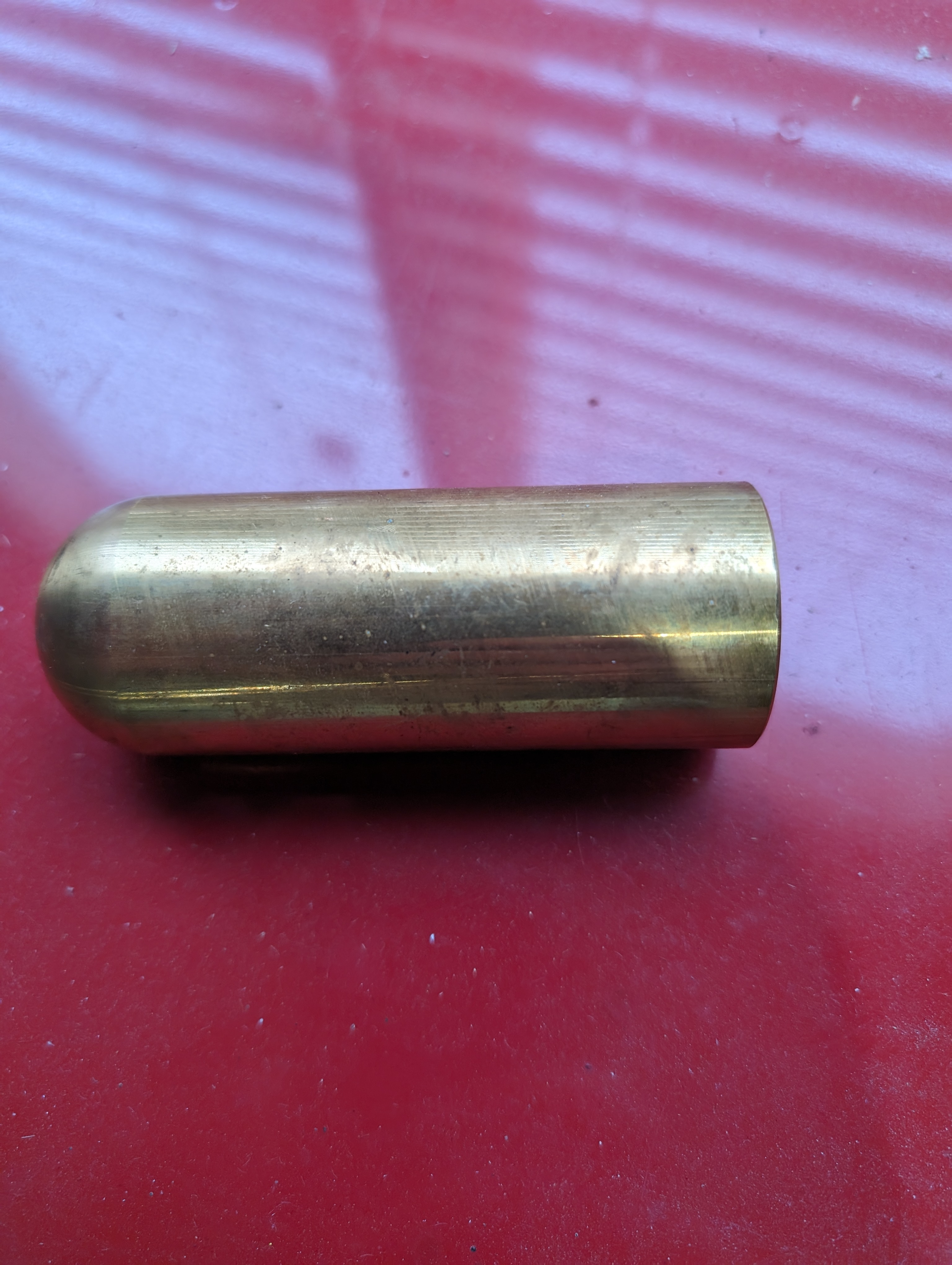
| Brass | CZ | Better | Medium | Higher ampacity than MS. Preferred by Japanese OEMs. One Tier 1 facility has been running brass tips for 32+ months (3rd set) with no bath contamination issues. |
| Stainless Steel | SS | Lower | Medium | Corrosive environments. Longer tip life in aggressive chemistries. |
| Copper | Cu | Best | Higher | Maximum conductivity. Specialty applications. |
The common objection to brass tips — "copper contamination in the bath" — is overblown based on field experience. Multiple operations running brass tips in alkaline and acid zinc have documented no measurable contamination impact over years of use.
Step 4: Fixed vs. Removable Tips
Fixed tips are welded permanently to the cable. Lower upfront cost. When the tip wears out (typically 8-12 months), the entire dangler is replaced.
Removable tips screw into the cable end. The cable lasts for years; you replace only the tip when it wears — at $15-31 per tip versus $110+ for a new dangler. Available in Left Hand (black shroud, grooved tip) and Right Hand (white shroud, smooth tip). Requires barrels that turn in one consistent direction.
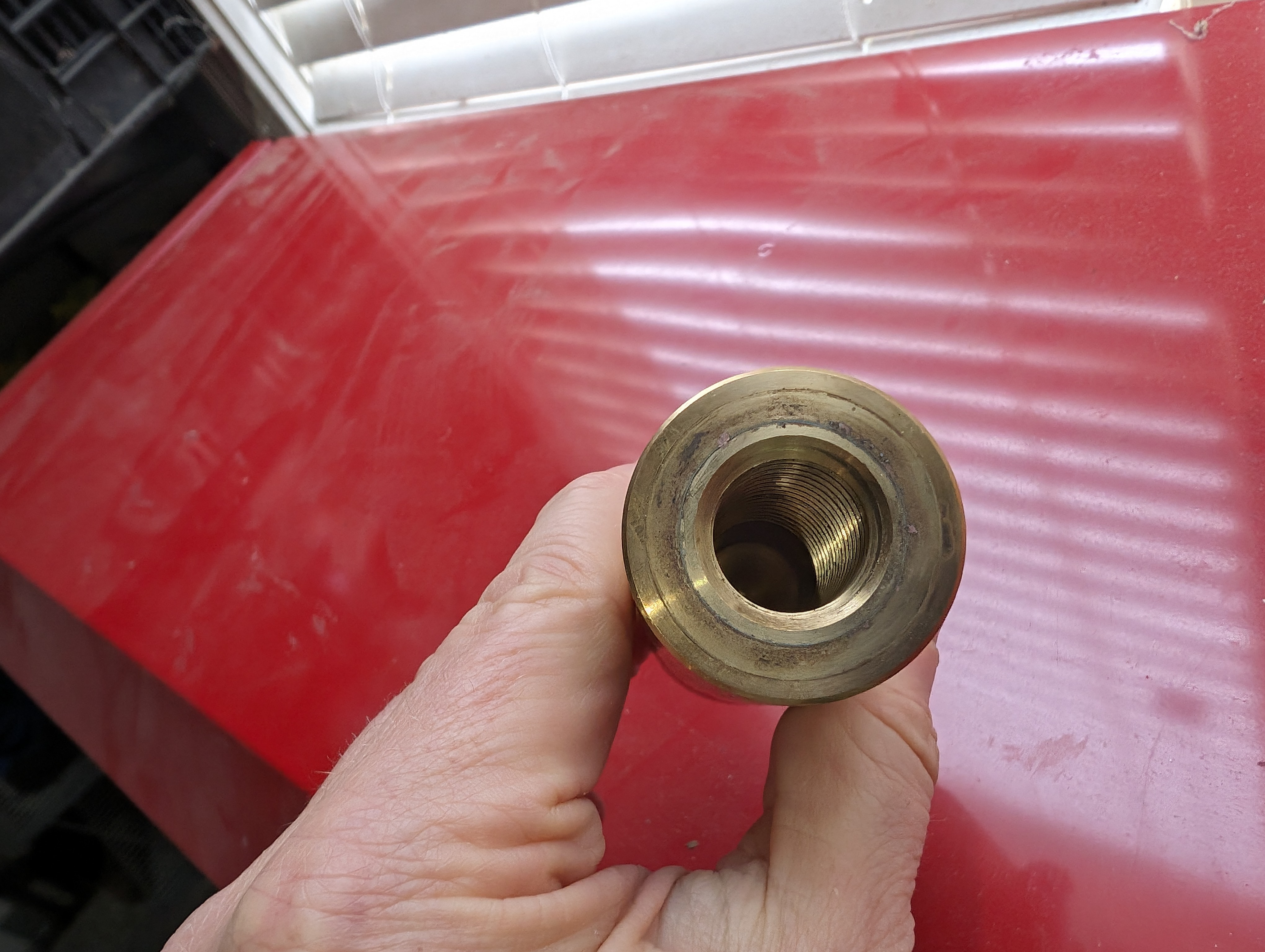
The typical progression: Most customers start with fixed tips on their first trial order. After 8-12 months when tips wear, they switch to removable — realizing the cable itself is still in excellent condition. Removable tips are the better long-term economic choice for any operation that goes through tips regularly.
Step 5: Check Your Bearing Bore — The Critical Installation Detail
This is where most installations hit a snag. Eagle PUR cable has a consistent diameter of 28.5mm for 120mm² cable — there is no step-down or taper. US domestic barrel manufacturers typically build a step-down into their bearings that won't accommodate Eagle's consistent-diameter cable.
The fix: Drill out the bearing through-hole to 30mm (1.18") minimum. This gives 1.5mm clearance for the 28.5mm cable. Standard bearing angle is 11 degrees down. The dangler hole in the bearing hub must point downward toward the lower part of the barrel.
If drilling isn't feasible: Eagle can manufacture new bearings with a 30mm angled hole at 11 degrees. Alternatively, a copper outrigger adaptor creates an alternative mounting point that bypasses the bearing bore entirely — useful when existing barrel infrastructure can't be modified.
Step 6: Lug Size
The lug connects the dangler to the busbar. Three standard sizes:
- M10 (10.5mm bolt hole) — smaller applications, lighter current
- M12 (13.0mm bolt hole) — most common, standard for 120mm²
- M16 (16.5mm bolt hole) — heavy-duty applications
Outrigger Adaptors — When You Need One
An outrigger is a copper bracket that extends the electrical connection point from the busbar to a new dangler mounting position. It's used when the existing barrel bearing bore is too small for Eagle cable, or when the busbar-to-barrel geometry needs to be reconfigured.
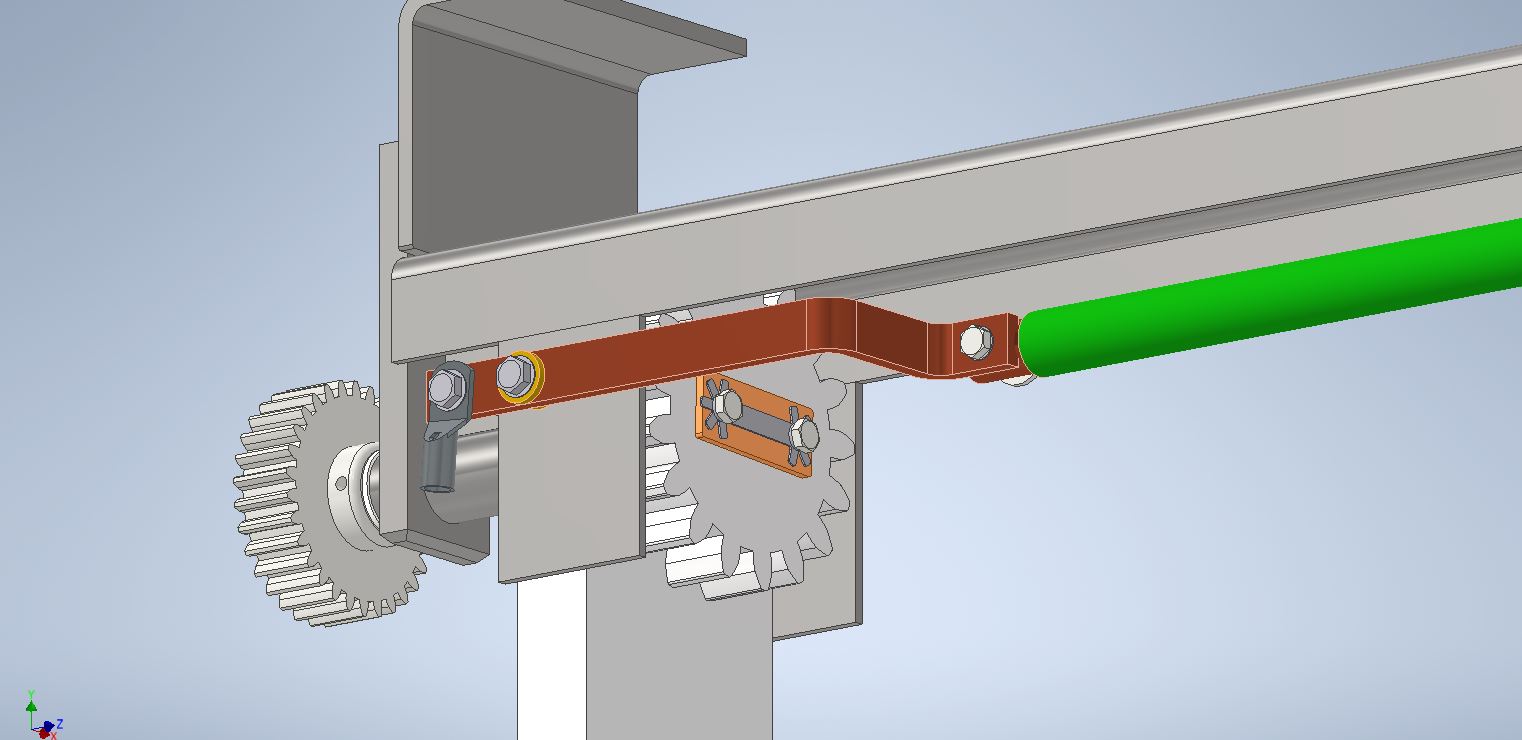
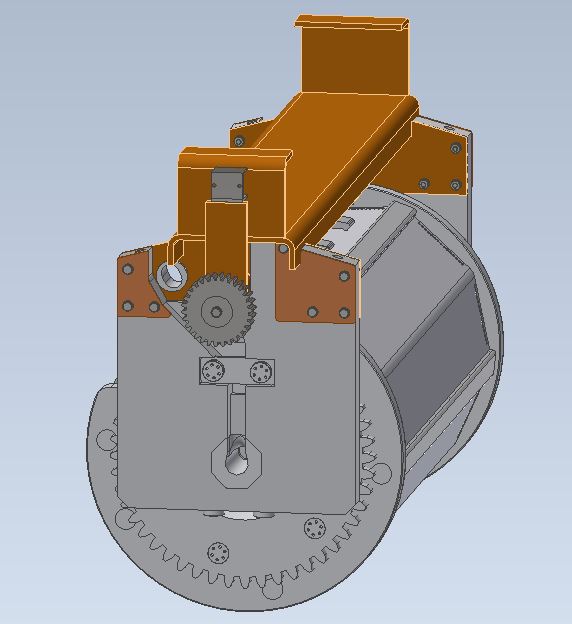
Outriggers include phenolic insulation washers to prevent electrical contact between the copper bracket and the steel superstructure. Eagle provides the 13mm dangler connection hole; the customer drills mounting holes specific to their superstructure.
When outriggers are used, dangler length is typically shorter — because the outrigger provides the additional reach that the dangler would otherwise need.
The Eagle PUR Cable Advantage
Eagle uses PUR (polyurethane) insulation on all 120mm² and 185mm² cables. PUR eliminates the cracking, twisting, and pig-tailing failures common with older rubber and PVC cables. It's cut-resistant, chemically resistant, and maintains flexibility across the full temperature range of plating operations. Customers have documented 8-10x longer dangler lifespan compared to domestic competitor cables.
How to Order
To spec a dangler, we need four measurements and two selections:
- Overall length (bolt hole center to tip end)
- Bolt hole diameter (M10, M12, or M16)
- Cable size (120mm² for 97% of applications)
- Bearing bore diameter (to confirm fit or plan drill-out)
- Tip material (MS, CZ, SS, or Cu)
- Tip type (Fixed or Removable L/H or R/H)
Eagle provides a dangler template form to capture these specs. Lead time is typically 2-3 weeks from order.
Ready to spec danglers for your line? Send us your measurements or request a dangler template form — we'll draw up the configuration and get you a quote, typically within one business day.
Request a Dangler Quote →