
Barrel Door Types Explained: How to Choose the Right Loading Mechanism for Your Plating Operation
The Door Matters More Than You Think
The barrel door is the most mechanically active component on a plating barrel. It opens and closes every cycle — hundreds of times per week, thousands of times per year. It has to seal reliably under immersion, survive chemical exposure, handle the mechanical stress of loaded parts shifting during rotation, and do all of this without adding cycle time or creating an entrapment risk.
Most barrel conversations focus on material, perforation, and geometry — which are critical. But the door type determines how your operators interact with the barrel every single cycle. The wrong door for your application means slower changeovers, higher maintenance, and eventually, production downtime from a mechanism that wasn't designed for your loading pattern.
Eagle Engineering offers six door configurations, each built from the same PE1000 UHMW material as the barrel body. Here's what each one does and when to use it.
1. Two-Piece Clip Lid
The clip lid is Eagle's most straightforward door design. Two PE1000 lid sections sit within a recessed door frame and are secured by PE1000 clips that snap into place. The joint between the two halves uses a sinusoidal (wave) pattern — the interlocking zigzag edge prevents parts from lodging in the seam during rotation.
How it works: Release the PE1000 clips, lift out the two lid halves, load or unload parts, replace the halves, and re-engage the clips. No tools, no fasteners, no springs.
Best for: Standard manual loading operations where simplicity and reliability are priorities. The two-piece design means each lid half is lighter and easier to handle than a single-piece door — an ergonomic advantage on larger barrels. The PE1000 clips won't corrode, fatigue, or lose spring tension the way metal clips do in a plating environment.
Consideration: Switching from another door type (like cam-lock) to a clip lid requires a change in the perforation laser pattern — the door slot position shifts from approximately 48.5 degrees to 60.0 degrees off center. This is a factory specification, not a field retrofit.
2. Cam-Lock (Automatic/Twist Cam)
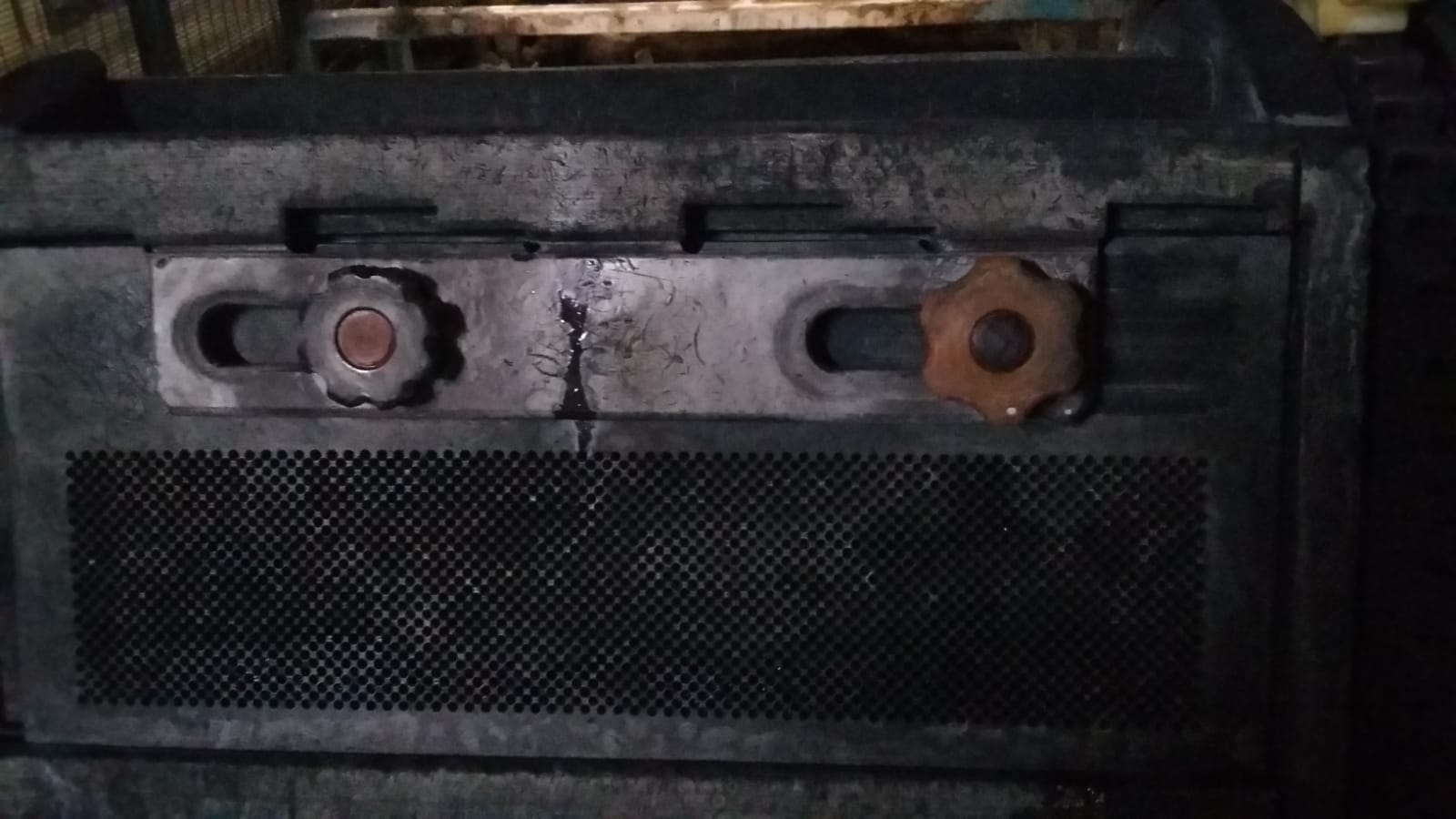
The cam-lock uses a single-piece door secured by rotating cam mechanisms. Each cam bolt has a tapered body that wedges the door tight against the barrel frame when turned to the locked position. A quarter-turn releases the lock.
How it works: Rotate the cam handles to the open position, remove the single-piece door, load parts, replace, and rotate the cams back to lock. The tapered cam body creates a progressively tighter seal as it rotates — no adjustment needed over time.
Best for: Operations that want fast open/close cycles with a positive mechanical lock. The single-piece door is simpler to handle than a two-piece design, and the cam mechanism provides a tactile confirmation that the door is fully locked. This is Eagle's original standard door design for many barrel configurations.
Consideration: The cam handles protrude slightly from the barrel surface. In tight-clearance installations or lines where barrels pass close to tank walls, verify that handle protrusion doesn't create an interference issue.
3. Inside-Out Door
Eagle's inside-out door is a springless design where the door panel opens by pushing inward and pulling outward. The key engineering advantage: the weight of the parts inside the barrel actually helps tighten the door fit during rotation. Gravity works with the mechanism rather than against it.
How it works: Push the door panel inward from the outside, which releases the talon from the slide channel. The door swings or lifts inward, providing full access to the barrel interior. To close, the door is pulled outward until the talon re-engages the slide. The weight of the loaded parts pressing against the interior face of the door creates the seal.
Key design features:
- Springless — no springs to fatigue, corrode, or lose tension in a chemical environment
- Talon-and-slide locking — the door talon fits into a machined slide channel in the barrel frame
- Integrated breaker bars — built into the door panel to help mix and separate parts during rotation
- One-piece PE1000 construction — reinforced rails for structural integrity
- Perforated windows — door panels include perforations for solution flow, matching the barrel wall open area
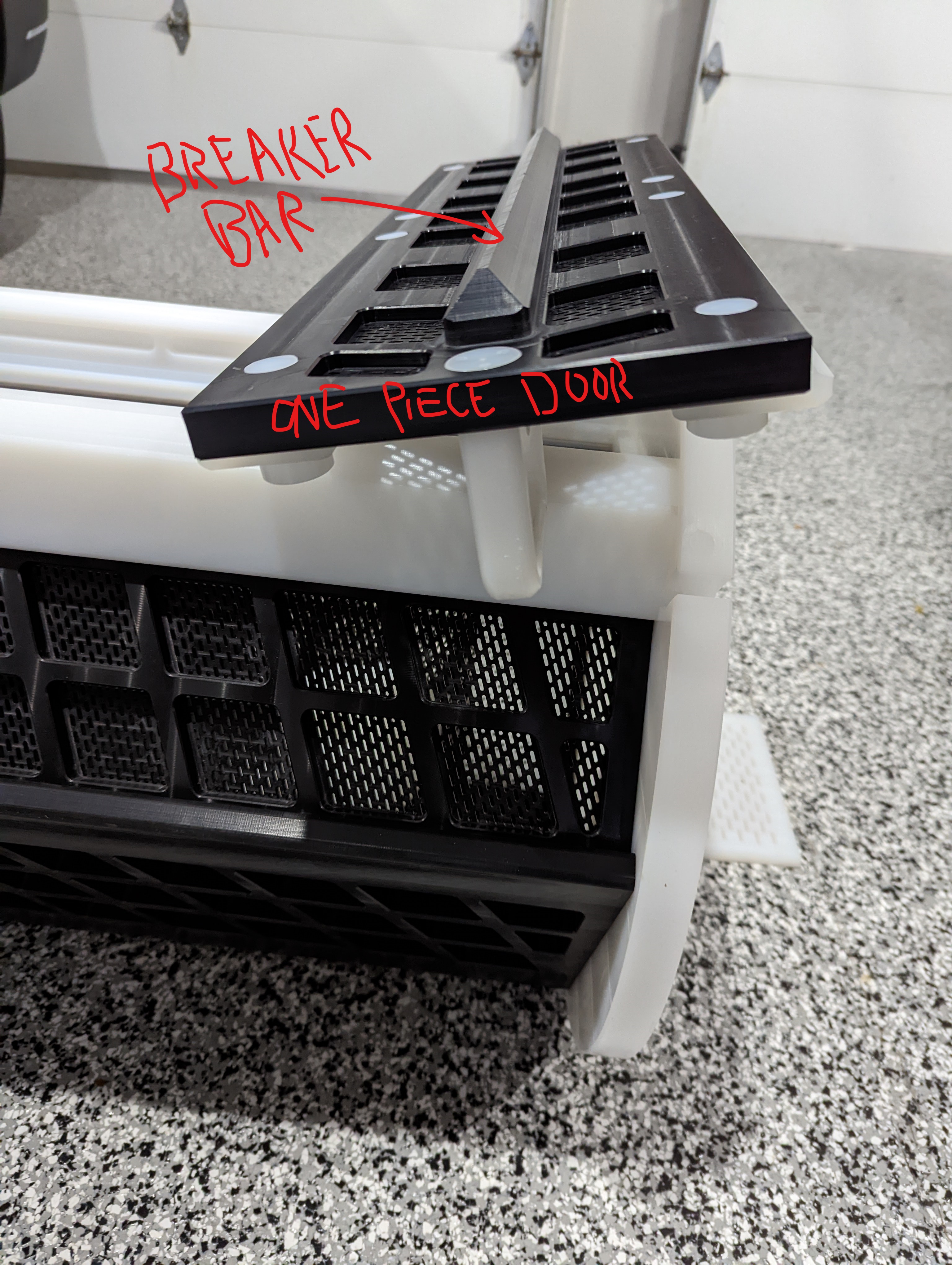
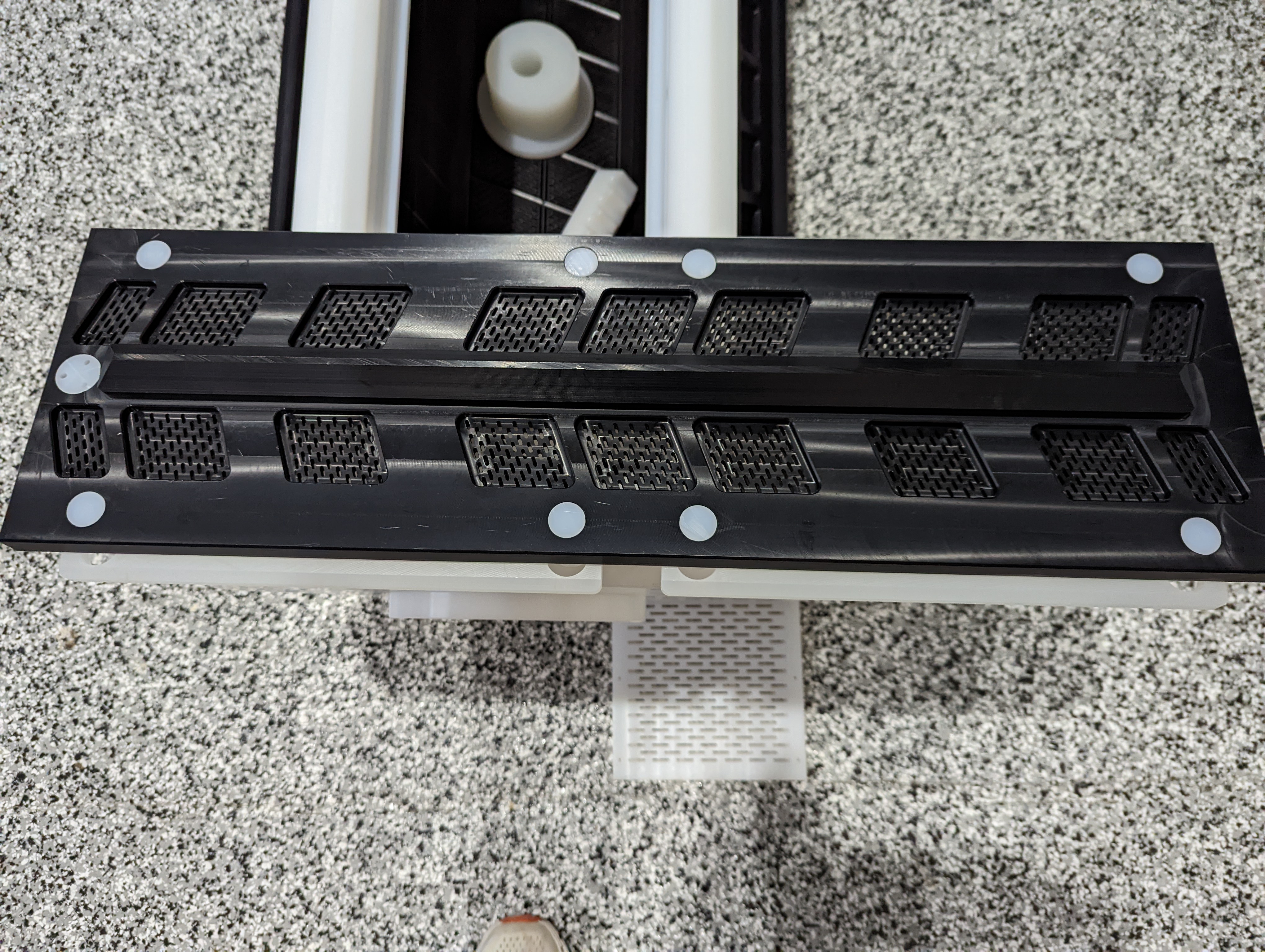
Best for: Heavy-load applications where the self-tightening behavior under load is a significant advantage. Also well-suited to operations that want to eliminate spring maintenance entirely. Available with optional spring assist for applications that need positive closing force independent of load weight.
4. Sliding Catch Lid
The sliding catch lid uses a horizontal sliding mechanism to lock the door in position. The lid slides into a track and a catch engages to hold it. Available in single or two-piece configurations.
How it works: Slide the lid horizontally along the track until the catch engages (audible and tactile click). To open, release the catch and slide the lid back out. The horizontal sliding action means the lid doesn't need to be lifted — reducing the physical effort of opening and closing on larger barrels.
Best for: Retrofit applications — particularly operations replacing barrels from other manufacturers. Eagle's sliding catch lid is designed as a drop-in replacement for existing barrel systems, allowing facilities to upgrade to PE1000 barrel material without retraining operators on a new door mechanism. Also effective on two-piece configurations where each half slides independently.
5. Linkage Lid (Split-Compartment)
The linkage lid is purpose-built for split-compartment barrels — barrels divided into two or more internal sections that allow different part types to be plated simultaneously in the same barrel. The linkage mechanism coordinates the opening and closing of multiple door sections.
How it works: The linkage connects multiple door sections through a mechanical linkage system. Operating one section of the linkage opens or closes the corresponding compartment doors. This allows operators to access individual compartments independently or open all compartments simultaneously, depending on the linkage configuration.
Best for: Split-compartment barrels only. If you're running different part types in separate compartments of the same barrel — common in operations that need to keep part lots separated for traceability while maximizing barrel utilization — the linkage lid is the only door type designed for this configuration. Part number suffix: SCLL (Split Compartment Linkage Lid).
6. Automated Lid (Auto-Lid)
For fully automated and robotic plating lines, Eagle offers automated lid systems that open and close without manual intervention. These are designed for integration with robotic loading systems — the barrel lid opens automatically when the barrel reaches the loading station, and closes after the robot completes the loading cycle.
Best for: Fully automated plating lines with robotic barrel loading. If you're running or planning a Sidasa-integrated robotic line, or any automated system where manual door operation would create a bottleneck, the auto-lid eliminates the human step entirely. This is the door type that enables true lights-out barrel plating operation.
All PE1000 — All the Time
Regardless of door type, every Eagle barrel door is manufactured from the same PE1000 UHMW material as the barrel body. This matters because the door is exposed to the same chemical, thermal, and mechanical environment as the barrel walls. A PE1000 barrel with a polypropylene door would create a weak point — the door would degrade faster than the barrel it's mounted on, requiring door replacement while the barrel is still in service.
Eagle's doors have been documented in service for 20+ years alongside the barrel body — the door hardware (clips, cams, handles, talons) all maintains function across the full barrel lifespan. The 20-year-old barrel still in daily production service shows door mechanisms that are worn but fully functional after two decades of continuous operation.
How to Choose
Match the door type to your production reality:
| If you need... | Consider |
|---|---|
| Simple, reliable manual loading | Two-Piece Clip Lid — no tools, no springs, ergonomic on large barrels |
| Fast cycle with positive lock confirmation | Cam-Lock — quarter-turn positive lock, single-piece door |
| Heavy loads, zero spring maintenance | Inside-Out Door — load weight tightens the seal, springless design |
| Drop-in replacement for existing barrels | Sliding Catch Lid — designed to retrofit onto existing systems |
| Split-compartment barrel | Linkage Lid — the only option for multi-compartment access |
| Robotic / automated line | Auto-Lid — no manual operation, lights-out capable |
Not sure which door type fits your operation? Eagle's engineering team specs the door as part of the barrel design — send us your barrel dimensions, loading method, part weight, and cycle requirements, and we'll recommend the right configuration.
Every Eagle barrel is custom-engineered to your specifications — including the door type. Tell us about your production requirements and we'll spec the right barrel and door configuration.
Request a Barrel Quote →