Detachable Dangler Tips: The $9,000/Year Savings Most Plating Shops Don't Know About
The Problem with Every Other Dangler on the Market
A cathode dangler has two components that wear at completely different rates. The cable — the copper conductor and its insulation — can last for years if the insulation is durable enough. The contact tip — the piece that touches the parts inside the barrel — wears out in 8-12 months under normal production conditions. It's a consumable. It gets plated onto, abraded, and eventually loses effective contact.
On every domestic dangler, the tip is permanently welded or crimped to the cable. When the tip wears out, you throw away the entire dangler — cable, insulation, lug, everything — and buy a new one. You're discarding a perfectly good cable because an $15-31 wear item reached the end of its life. Multiply that by 96 danglers on a 48-barrel line, and you start to see the scale of the waste.
How Eagle's Detachable Tip Works
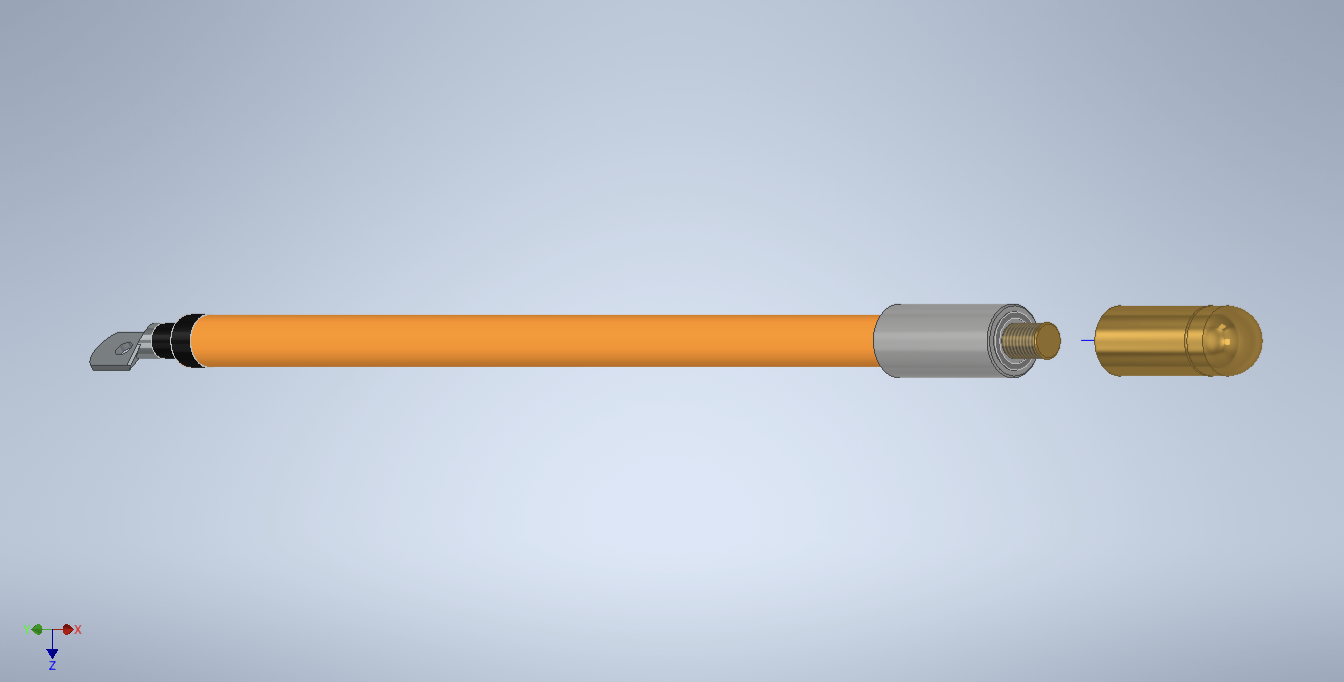
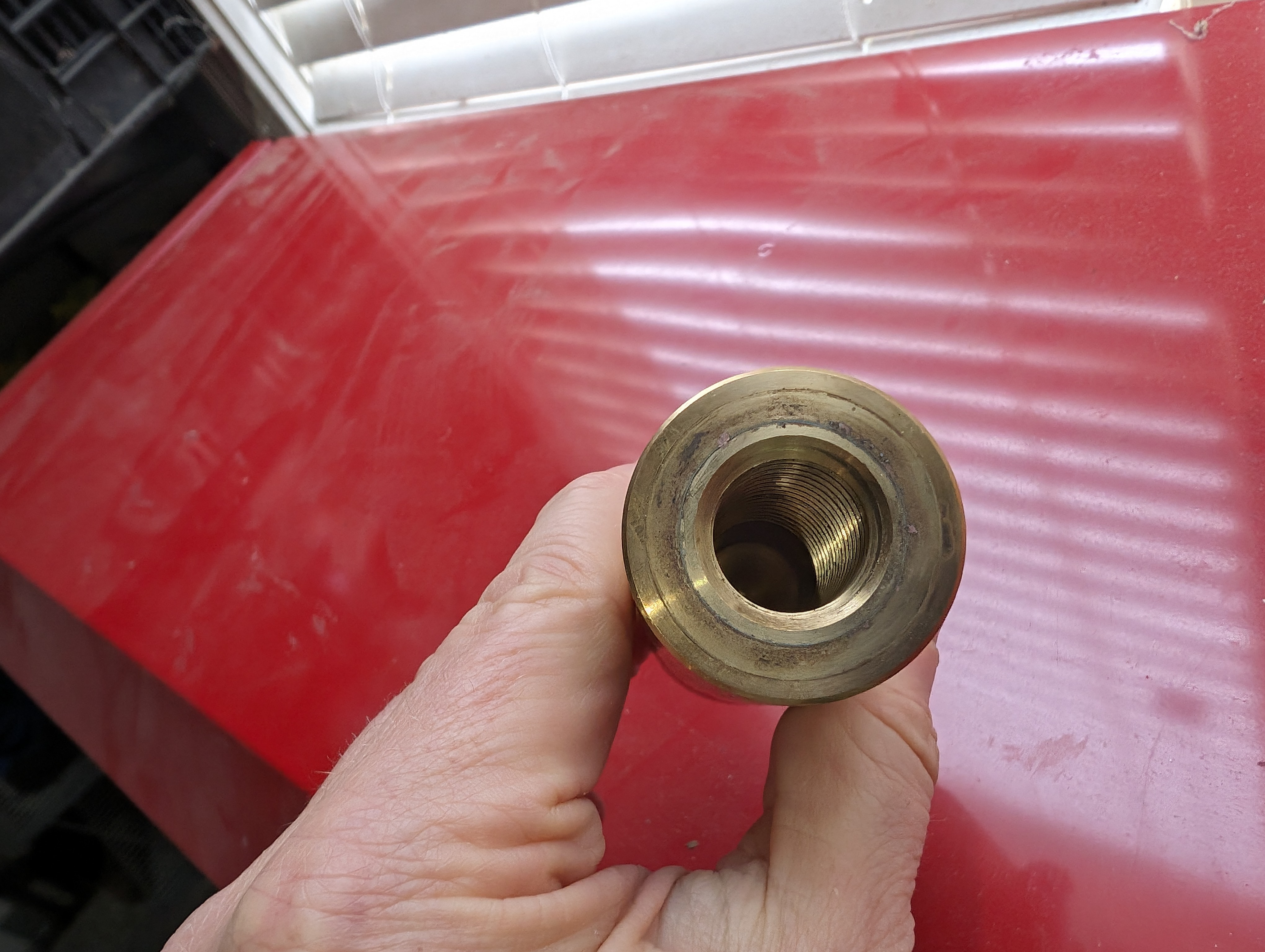
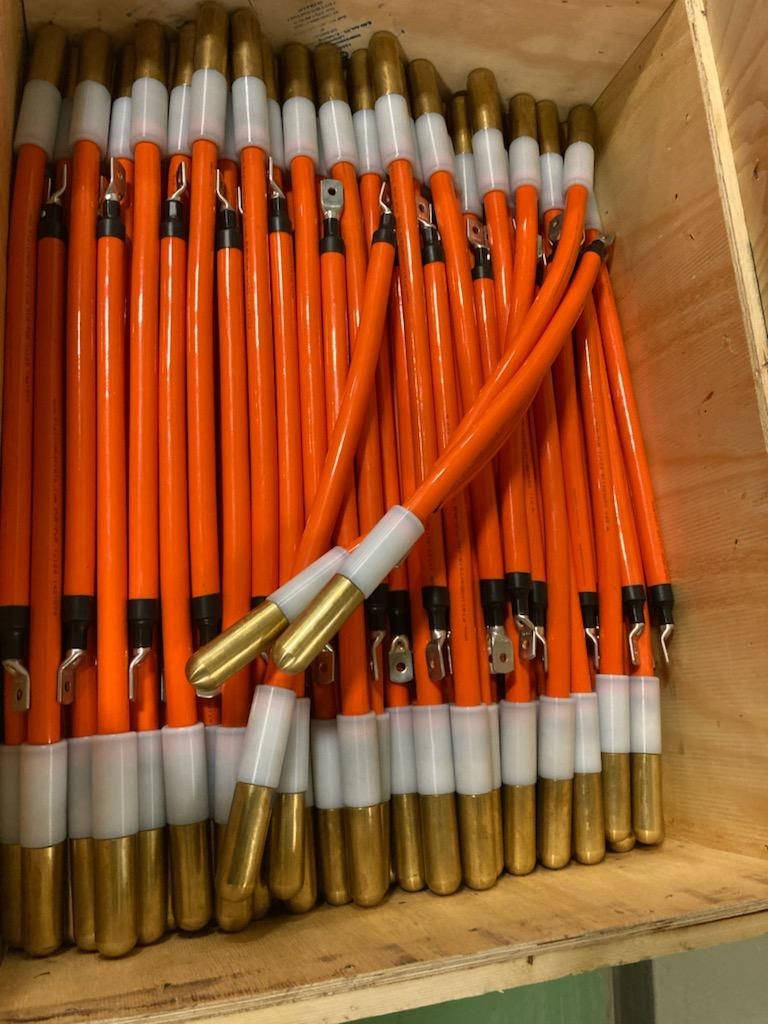
Eagle Engineering's removable tip danglers use a threaded receptacle at the cable end. The contact tip screws in — left-hand or right-hand thread, depending on your barrel rotation direction. The threading is chosen so that barrel rotation tightens the tip rather than loosening it. When the tip wears out, an operator unscrews it and threads on a replacement. The swap takes under 60 seconds per dangler. No tools beyond a wrench. No cable disconnection. No busbar work. The barrel doesn't need to come offline.
Color-Coded for Safety
Every removable tip is color-coded to prevent installation errors:
| Thread | Shroud Color | Tip Surface | How to Identify |
|---|---|---|---|
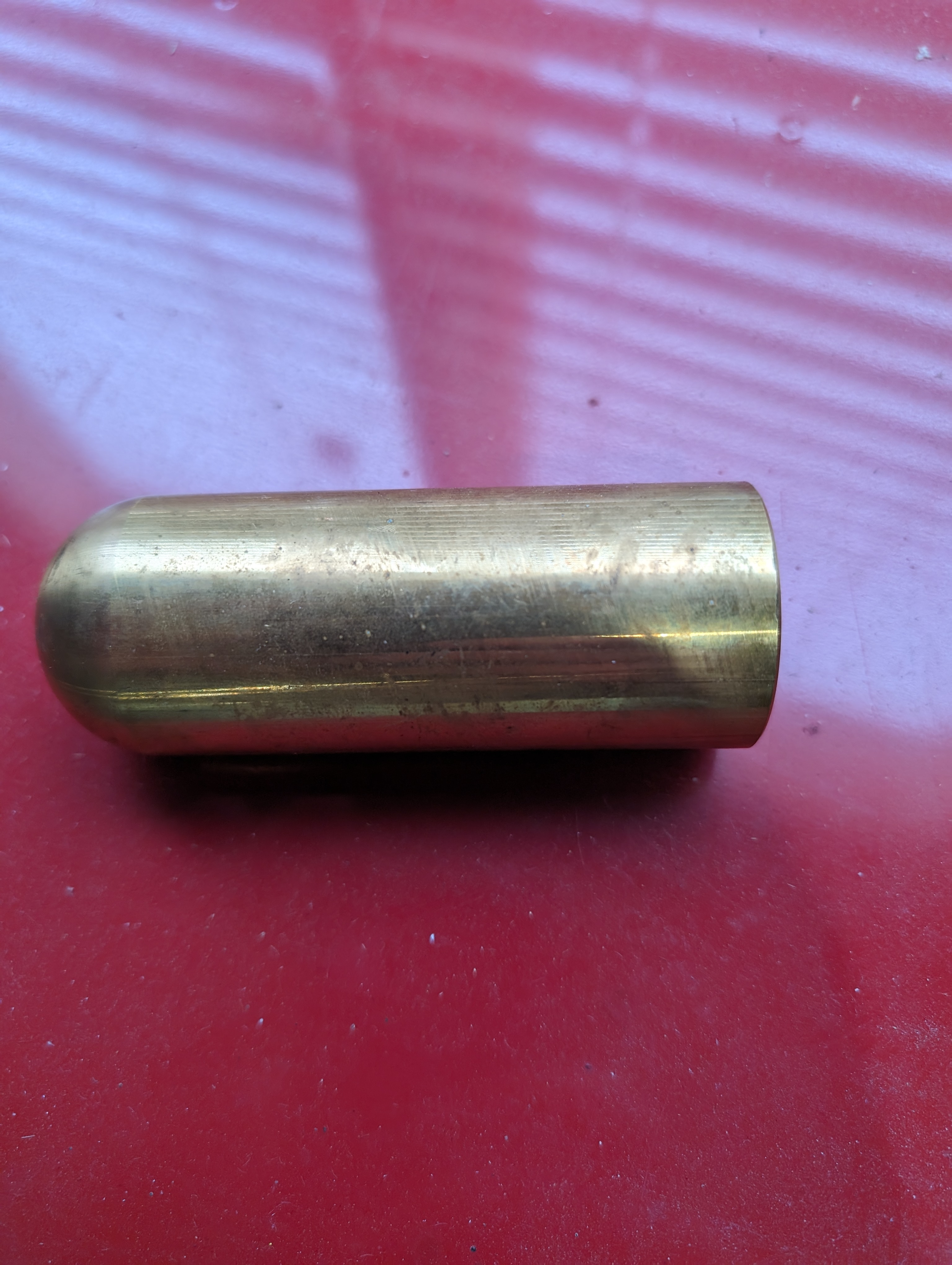
| Right Hand (RH) | White | Smooth | White shroud, smooth tip — you can see and feel the difference instantly |
| Left Hand (LH) | Black | Grooved (ID groove) | Black shroud, grooved tip — impossible to confuse with RH |
This isn't cosmetic. On a busy production floor, an operator swapping tips needs to grab the right one without checking a part number. White/smooth = right hand. Black/grooved = left hand. No ambiguity.
The Math — 48-Barrel Line
This is where the detachable tip system changes from a nice feature to a financial no-brainer. Consider a standard 48-barrel zinc line running 96 danglers (2 per barrel), with tips wearing every 10 months on average:
| Cost Component | Fixed Tip (Replace Full Dangler) | Detachable Tip (Replace Tip Only) |
|---|---|---|
| Replacement cost per unit | $80-120 (full dangler) | $15-31 (tip only) |
| Annual replacements (96 danglers) | 96 full danglers | 96 tips |
| Annual cost | $11,520 | $2,400 |
| Changeover time per unit | 15-30 min (disconnect, remove, install, reconnect) | Under 60 seconds (unscrew, screw in) |
| Annual changeover labor (96 units at $50/hr) | $1,200-$2,400 | ~$80 |
| Total annual cost | $12,720-$13,920 | ~$2,480 |
Annual savings: approximately $10,200-$11,400 per line. And that's before you account for reduced production downtime — a tip swap takes under a minute versus 15-30 minutes for a full dangler replacement that requires disconnecting the busbar connection, removing the old cable, threading the new one through the bearing bore, and reconnecting.
What You're Really Paying For with a Fixed-Tip Dangler
When you buy a fixed-tip dangler, roughly 70-80% of the cost is the copper conductor and PUR insulation — components that have years of service life remaining when the tip wears out. You're paying $80-120 to replace a $15-31 wear item. The copper and insulation you throw away are perfectly functional.
With Eagle's detachable system, you buy the cable once. The PUR insulation — 100% ether polyurethane, Shore A 90, rated from -30 degrees C to +70 degrees C, hydrolysis resistant, chemically inert — lasts for years. Customers have documented Eagle PUR cables running for 8-10x the lifespan of domestic PVC-insulated alternatives. The cable is an asset. The tip is the consumable. Eagle's system treats them accordingly.
Field Data — 32 Months and Counting
A Tier 1 Japanese automotive facility in Indiana switched to Eagle danglers with brass detachable tips on both their alkaline zinc and acid zinc lines. After 32 months of continuous production, the PUR cables are still in service — on their 3rd set of brass tips. Zero brass contamination issues in either bath chemistry. The brass provides better conductivity than mild steel, which is why Japanese zinc plating operations specifically prefer it.
At another operation, the switch from domestic fixed-tip danglers to Eagle removable tips dropped the dangler maintenance budget by more than 70%. The cable itself was still in excellent condition at the 12-month mark — the point where domestic danglers would have been completely replaced.
The Progression — How Most Customers Get There
Eagle recommends a specific pathway:
Step 1: Trial with fixed mild steel tips. Order 2-4 danglers with fixed mild steel tips — the lowest upfront cost. This validates the PUR cable performance on your line. Lead time: 2-3 weeks.
Step 2: Run for 8-12 months. When the mild steel tips wear out, look at the cable. It will still be in excellent condition — no cracking, no stiffening, no pig-tailing. This is the moment that converts most customers.
Step 3: Switch to removable tips. Order replacement tips (mild steel at $15, stainless at $22, brass at $26-31) and screw them onto the existing cables. From this point forward, your annual dangler cost drops by 70%+ because you're only replacing tips.
This progression works because it lets you prove the cable quality before committing to the removable system. Most shops that start with fixed tips switch to removable after the first tip wear cycle — because the evidence is in their hands.
Tip Material Selection
| Material | Cost/Tip | Best For |
|---|---|---|
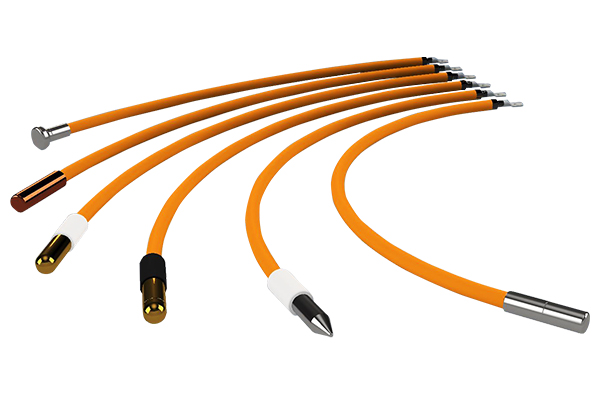
| Mild Steel | $15 | Most US job shops. Standard choice for alkaline and acid zinc. Lowest cost per replacement cycle. |
| Stainless Steel | $22 | Aggressive chemistries where mild steel corrodes too quickly. Longer tip life offsets higher cost. |
| Brass | $26-31 | Higher conductivity than steel. Preferred by Japanese automotive OEMs. Field-proven over 32+ months with no bath contamination. |
| Copper | Custom | Maximum conductivity. Specialty applications requiring the lowest possible electrical resistance at the contact point. |
The One Requirement
Detachable tips require that the barrel rotates in one consistent direction. The tip threading — left-hand or right-hand — is matched to the rotation so that barrel movement tightens the tip during operation rather than loosening it. If your barrels reverse direction during the plating cycle, fixed tips are the appropriate choice. Most barrel plating operations run in a single rotation direction, which means most operations qualify for detachable tips.
The Bottom Line
The detachable tip isn't a premium feature — it's a structural cost advantage that compounds every replacement cycle. The first tip swap is where you see the savings. The third tip swap, with the original cable still running perfectly, is where you realize the savings are permanent. On a 48-barrel line, that's $10,000+ per year, every year, for the life of the cable.
No other dangler manufacturer offers a screw-in removable tip system. Every competitor requires full dangler replacement when the tip wears. The cost difference isn't incremental. It's structural.
Start with a trial order of 2-4 Eagle PUR danglers with fixed mild steel tips. See the cable quality for yourself. When the tips wear, switch to removable and start compounding the savings. Lead time: 2-3 weeks.
Order a Dangler Trial →